
The global laser‑processing market is accelerating—fueled by semiconductor advanced packaging & AI/Quantum computing, the expansion of PCB and FPCB manufacturing, explosive growth in OLED and micro‑LED display production, and the push for tighter tolerances across biomedical, battery, and precision‑metal applications. Across all these segments, OEMs face unrelenting pressure to increase throughput, maintain sub‑micron accuracy, and support increasingly complex motion paths.
ACS Motion Control’s Laser Control Interface (LCI) directly addresses these pressures by delivering deterministic, position‑synchronized laser firing and power modulation across 2 to 5 axes. As laser processes evolve toward higher density, finer geometries, and complex multi‑axis coordination, LCI provides the trigger fidelity and temporal precision needed to keep pace with market demands.
Market Drivers: Finer Features, Higher Throughput, and Multi‑Axis Complexity
Across semiconductor and electronics manufacturing, the shift toward advanced packaging, micro‑interconnects, and heterogeneous integration demands increasingly fine laser features and higher process stability. Key laser‑processing application domains from your files include:
- TSV/TGV drilling, direct‑write lithography, and laser direct imaging, where consistent pulse placement and minimal thermal variation are critical.
- PCB/FPCB cutting and drilling, where multi‑layer stacks require precise depth control and synchronization between translational and rotational axes.
- OLED and micro‑LED fabrication, where uniform energy delivery prevents pixel‑edge damage at high process speeds.
- Glass, foil, and wafer micromachining, driven by consumer electronics miniaturization.
These applications increasingly involve multi‑axis contouring, complex spline‑based toolpaths, and smooth constant velocity throughout the entire process.
Why the LCI Matters: Deterministic Laser Firing at Sub‑Microsecond Latency
The LCI is designed specifically for position‑based and velocity‑dependent laser control, enabling precise energy placement even in high‑speed contour motion. Its capabilities include:
1. Sub‑microsecond latency
LCI delivers position‑based trigger outputs with extremely low latency and deterministic timing, ensuring each laser pulse aligns with the actual toolpath. This is crucial for multi‑axis processes where velocity can vary dramatically through corners or along spline paths.
2. Multiple laser‑activation modes for any contour
LCI supports a full suite of programmable modes:
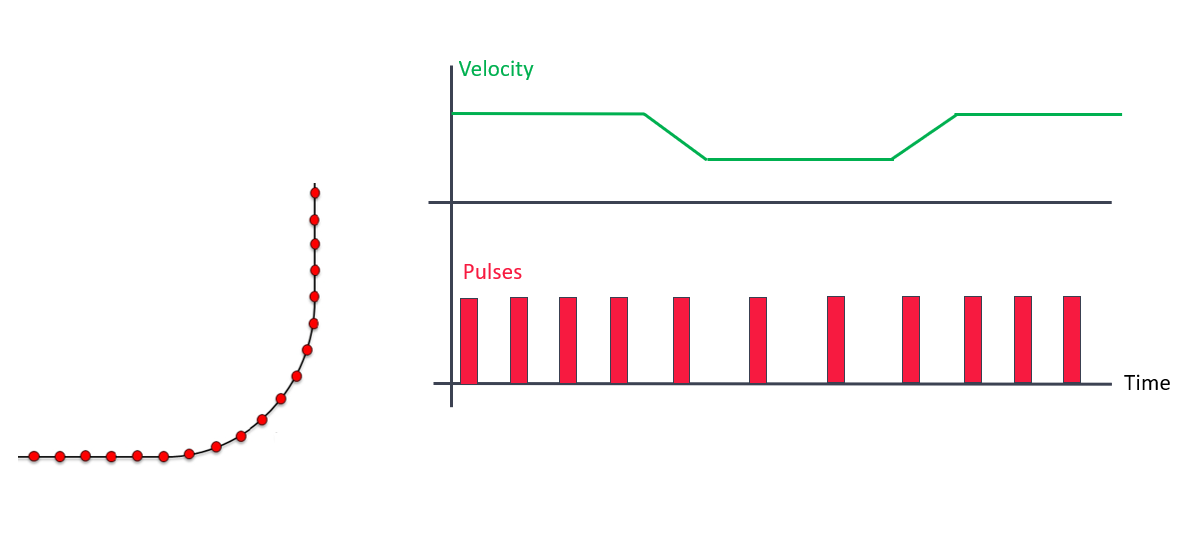
- Fixed Distance Pulsing
- Segment‑Based Gating
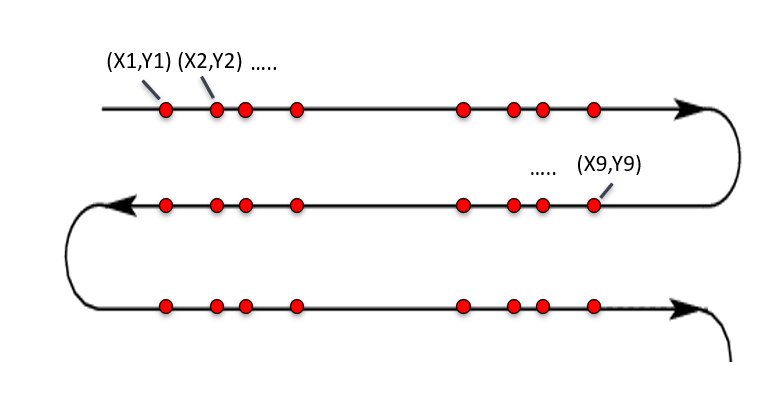
- Coordinate Array Pulsing
- Distance Array Pulsing
- Coordinate Array Gating
- Distance Array Gating
These modes can also be combined internally for greater flexibility—an advantage for complex part geometries requiring selective pulsing or adaptive energy modulation.
View our LCI datasheet with the following examples and more.
3. Flexible power‑control formats
LCI offers PWM, analog, and digital power‑control outputs, enabling OEMs to interface with a wide range of industrial, UV, ultrafast, and fiber lasers. This versatility is essential given the market’s diversity of wavelength, pulse‑width, and power‑modulation requirements.
4. Consistency through speed variations
One of the persistent challenges in laser processing is scorching or over‑burning during speed drop‑offs (e.g., contour corners). LCI’s fixed‑distance pulsing maintains uniform spatial energy distribution, preventing damage even when axis velocities fluctuate.
Serving the Full Spectrum of High‑Demand Laser Markets
LCI’s feature set aligns directly with the needs of OEMs operating in:
- Semiconductor wafer processing (singe‑digit microns; TSV/TGV; interconnect drilling)
- OLED & micro‑LED display machining (thin‑film layers requiring ultra‑consistent energy)
- PCB/FPCB processing (multi‑layer, varied thickness materials)
- Automotive & aerospace components (precision metal cutting and welding)
- Biomedical device manufacturing (micro‑features and thin‑wall components)
As these industries push for more throughput and tighter tolerances, LCI provides the synchronization backbone that enables high‑speed, high‑density laser processing systems to scale.
Integrating Motion and Laser: LCI within the ACS Architecture
The LCI is part of ACS’s larger SPiiPlus motion‑control ecosystem, which combines:
- Universal servo drives supporting various motor and encoder types
- High‑bandwidth servo algorithms like ServoBoost for faster settling and reduced jitter
- Advanced profile‑generation tools such as XSEG and SmoothPath, enabling smooth, high‑speed contour execution with minimal error and reduced cycle times
- Real‑time programming via ACSPL+, ensuring deterministic coordination between motion profiles and laser events, even at 10 kHz program cycle rates
This architecture allows the LCI to operate not as an isolated laser trigger, but as an integrated, synchronous part of the motion system, ensuring that every pulse is placed exactly where the toolpath requires.
Conclusion: LCI as a Strategic Enabler in a Growing Market
The laser‑processing market’s trajectory is clear: higher density, more materials, tighter tolerances, and faster production cycles. ACS’s LCI directly aligns with these trends by offering:
- Deterministic, multi‑axis synchronized laser control
- Flexible pulsing and gating modes tailored for complex geometries
- Sub‑microsecond accuracy, crucial for modern sub‑micron processes
- Seamless integration with advanced trajectory generation and servo algorithms
As OEMs design next‑generation laser tools for semiconductor, electronics, display, biomedical, and industrial applications, LCI provides the synchronization precision and architectural flexibility needed to stay ahead of market demands.